Just in case anyone's wondering, I've been away all week participating in an evangelistic campaign in Toledo, and haven't had access to internet in order to post anything. I hope to get some new stuff up in the next couple of days.
Blessings to all,
David
Saturday, July 29, 2006


Wednesday, July 19, 2006
The Blind Men and the Elephant
The Blind Men and the Elephant
retold by Robin Wood 1999
Once upon a time, five blind men came upon an elephant.
"What is this?!" asked the first one, who had run headlong into its side.
"It's an Elephant." said the elephant's keeper, who was sitting on a stool, cleaning the elephant's harness.
"Wow! So this is an Elephant! I've always wondered what Elephants are like!" said the man, running his hands as far as he could reach up and down the elephant's side. "Why, it's just like a wall! A large, warm wall!"
"What do you mean, a wall?" said the second man, wrapping his arms around the elephant's leg. "This is nothing like a wall. You can't reach around a wall! This is more like a pillar. Yeah, that's it! An Elephant is exactly like a pillar!"
"A pillar? Strange kind of pillar!" said the third man, stroking the elephant's trunk. "It's too thin, for one thing, and it's too flexible for another. If you think this is a pillar, I don't want to go to your house! This is more like a snake. See, it's wrapping around my arm! An Elephant is just like a snake!"
"Snakes don't have hair!" said the fourth man in disgust, pulling the elephant's tail. "You are closer than the others, but I'm surprised that you missed the hair. This isn't a snake, it's a rope. Elephants are exactly like ropes."
"I don't know what you guys are on!" the fifth man cried, waving the elephant's ear back and forth. "It's as large as a wall, all right, but thin as a leaf, and no more flexible than any piece of cloth this size should be. I don't know what's wrong with all of you, but no one except a complete idiot could mistake an Elephant for anything except a sail!!!"
And as the elephant stepped aside, they tramped off down the road, arguing more loudly and violently as they went, each sure that he, and he alone, was right; and all the others were wrong.
The Elephant keeper sighed, and went back to polishing the harness, while the elephant winked solemnly at him.
One of my favorite parts of blogging is the interaction I am able to have with several other "m-bloggers" around the world, most notably (although there are quite a few others out there) Guy Muse in Ecuador, Ken Sorrell in Guatemala (*correction: Mexico), mr. t in South Asia, and Stepchild in Western Europe. I appreciate very much this opportunity to dialogue with others in other parts of the world.
I believe a lot of discussion on world missions, though, bears a haunting resemblance to this well-known story of "The Blind Men and the Elephant." Many of the problems in world missions come when we insist on our part of the elephant as the most accurate and legitimate description of the whole. The reality is that all of us (myself included), to some extent or another, are "blind men describing an elephant." Some areas of the world are more responsive; some are more resistant. Some have more obvious physical needs; some are bound by materialism. Some have practically no churches at all; some have highly developed denominational structures. As a result, the strategies that will be most effective will be different for each area.
As a missionary, I am grateful for blogs, and especially grateful for my fellow "m-bloggers." I believe that interacting with each other on these issues is generally encouraging and stimulating, and also helps us to get a better picture of what the "entire elephant" really looks like.
retold by Robin Wood 1999
Once upon a time, five blind men came upon an elephant.
"What is this?!" asked the first one, who had run headlong into its side.
"It's an Elephant." said the elephant's keeper, who was sitting on a stool, cleaning the elephant's harness.
"Wow! So this is an Elephant! I've always wondered what Elephants are like!" said the man, running his hands as far as he could reach up and down the elephant's side. "Why, it's just like a wall! A large, warm wall!"
"What do you mean, a wall?" said the second man, wrapping his arms around the elephant's leg. "This is nothing like a wall. You can't reach around a wall! This is more like a pillar. Yeah, that's it! An Elephant is exactly like a pillar!"
"A pillar? Strange kind of pillar!" said the third man, stroking the elephant's trunk. "It's too thin, for one thing, and it's too flexible for another. If you think this is a pillar, I don't want to go to your house! This is more like a snake. See, it's wrapping around my arm! An Elephant is just like a snake!"
"Snakes don't have hair!" said the fourth man in disgust, pulling the elephant's tail. "You are closer than the others, but I'm surprised that you missed the hair. This isn't a snake, it's a rope. Elephants are exactly like ropes."
"I don't know what you guys are on!" the fifth man cried, waving the elephant's ear back and forth. "It's as large as a wall, all right, but thin as a leaf, and no more flexible than any piece of cloth this size should be. I don't know what's wrong with all of you, but no one except a complete idiot could mistake an Elephant for anything except a sail!!!"
And as the elephant stepped aside, they tramped off down the road, arguing more loudly and violently as they went, each sure that he, and he alone, was right; and all the others were wrong.
The Elephant keeper sighed, and went back to polishing the harness, while the elephant winked solemnly at him.
One of my favorite parts of blogging is the interaction I am able to have with several other "m-bloggers" around the world, most notably (although there are quite a few others out there) Guy Muse in Ecuador, Ken Sorrell in Guatemala (*correction: Mexico), mr. t in South Asia, and Stepchild in Western Europe. I appreciate very much this opportunity to dialogue with others in other parts of the world.
I believe a lot of discussion on world missions, though, bears a haunting resemblance to this well-known story of "The Blind Men and the Elephant." Many of the problems in world missions come when we insist on our part of the elephant as the most accurate and legitimate description of the whole. The reality is that all of us (myself included), to some extent or another, are "blind men describing an elephant." Some areas of the world are more responsive; some are more resistant. Some have more obvious physical needs; some are bound by materialism. Some have practically no churches at all; some have highly developed denominational structures. As a result, the strategies that will be most effective will be different for each area.
As a missionary, I am grateful for blogs, and especially grateful for my fellow "m-bloggers." I believe that interacting with each other on these issues is generally encouraging and stimulating, and also helps us to get a better picture of what the "entire elephant" really looks like.
Monday, July 17, 2006
Help that Hurts
In September 1997, Dr. Jerry Rankin published the following article in The Commission magazine…
I firmly believe that Dr. Rankin was right on target with what he wrote here. Others, such as Steve Saint and Glenn Schwartz (just to name a few) have also written, chronicling the dangers of subsidizing national workers. In the meantime, people like K. P. Yohannon and groups like Partners International (just to name a few) have pointed out how missions dollars can go a lot further when used to support national workers. I personally believe there is a lot of truth to both sides of this question.
There is a distinct difference between supporting local "ministry" overseas (pastors’ salaries, church buildings, etc.), and supporting "missions" (church planting, training, etc.). Also, there are ways to get beyond the problems caused by individual workers being directly supported by Western money. The problem is that most churches in the West do not have enough missionary experience and expertise to be able to sort out these subtleties on the mission field by themselves. In order to do so with any modicum of accuracy, it is necessary to have people "on the ground" in the respective countries of missions efforts, who are able to get to know the various churches, organizations, and individuals involved.
At times, all this can get a bit messy. It is likely that we will make mistakes. I believe, for this reason, a lot of American churches steer clear of this altogether. They prefer to keep things simple, and avoid "getting in over their head." This, I believe, is a good reason for working through organizations like the International Mission Board. The leaders at the IMB usually have a lot better criteria for assessing and understanding situations in many parts of the world than individual churches in the States.
At the same time, however, the IMB is merely the sending branch of the collective efforts of the churches in the SBC, and is subject, by way of the Board of Trustees, to the preferences of the churches. If the churches themselves do not show much of an interest in this type of thing, it is difficult to expect the IMB to make great strides in investigating and implementing new strategies in relation to all of this. A big key, in my opinion, is for the churches in the States to become more interested in how we can be the best stewards possible, using whatever means necessary, to see that the Great Commission is fulfilled, more than merely how many missionaries and volunteer teams we can send out, and how many "professions of faith" we can record.
Help that Hurts
We are in an era of increased involvement in international missions. Partnerships and volunteer projects continue to multiply, and that is good. It is our desire to mobilize the resources and potential of churches, associations, state conventions and every Baptist entity to reach a lost world for Jesus Christ.
However, Americans often are unprepared for the poverty and economic disparity they find overseas. It is commendable that many respond with a compassionate desire to help out of the abundance of their Western affluence. But many are blind to the dangers of a valid spiritual ministry degenerating into material assistance, and how creating dependency can be detrimental to the health and growth of a church.
We are firmly committed to indigenous methods in our work of evangelism and church planting overseas. This means that mission efforts must produce churches that can exist, grow and multiply within their own culture and economy without any dependence on foreign resources. Over many years of missionary work around the world, missionaries have recognized it is a mistake to try to accelerate growth by an infusion of financial aid to build churches and support pastors. The result is usually a welfare mentality. Well intended financial assistance too often creates dependence and handicaps the initiative and faith essential for spontaneous growth.
One thing inevitably occurs when Americans subsidize the work of churches and pastors on the mission field: Potential growth is stalled because of a mind-set that it can't be done unless an overseas benefactor provides the funds. The congregation loses a sense of ownership and therefore ceases to be responsible since others provide for the financial needs of the pastor or the church.
Jealousy often develops among the pastors and churches who don't receive assistance toward those who develop a pipeline of support from the U.S. through their contacts with volunteers and others.
Cooperation between churches diminishes since they no longer need to work together in mutual support, encouragement and interdependency. In the long-term, support breeds resentment, especially if the support is not sustained indefinitely, because it creates a patronizing dependency. The donor is under the illusion of assisting the church just until it can grow to self-support, but that seldom happens. People are deprived of growing in faith, learning to depend on God and discovering that He is sufficient for all their needs.
Subsidy propagates a Western model of a church that sees a building and a paid pastor as essential rather than encouraging a reproducible biblical model of the church as gathered believers responsible to and for their own leadership and facilities. The work of the missionary is undercut in his effort to minister in a spiritual partnership since he is seen as uncaring in not providing the same material and financial aid.
Explosive growth in China, a 50 percent annual church growth rate in Malawi, 73 churches established in Cambodia in the last four years, and similar advances around the world would never have occurred if a pattern of subsidy and dependence had been created. Unfortunately, well-intentioned help on many fields has handicapped long-term potential growth.
I firmly believe that Dr. Rankin was right on target with what he wrote here. Others, such as Steve Saint and Glenn Schwartz (just to name a few) have also written, chronicling the dangers of subsidizing national workers. In the meantime, people like K. P. Yohannon and groups like Partners International (just to name a few) have pointed out how missions dollars can go a lot further when used to support national workers. I personally believe there is a lot of truth to both sides of this question.
There is a distinct difference between supporting local "ministry" overseas (pastors’ salaries, church buildings, etc.), and supporting "missions" (church planting, training, etc.). Also, there are ways to get beyond the problems caused by individual workers being directly supported by Western money. The problem is that most churches in the West do not have enough missionary experience and expertise to be able to sort out these subtleties on the mission field by themselves. In order to do so with any modicum of accuracy, it is necessary to have people "on the ground" in the respective countries of missions efforts, who are able to get to know the various churches, organizations, and individuals involved.
At times, all this can get a bit messy. It is likely that we will make mistakes. I believe, for this reason, a lot of American churches steer clear of this altogether. They prefer to keep things simple, and avoid "getting in over their head." This, I believe, is a good reason for working through organizations like the International Mission Board. The leaders at the IMB usually have a lot better criteria for assessing and understanding situations in many parts of the world than individual churches in the States.
At the same time, however, the IMB is merely the sending branch of the collective efforts of the churches in the SBC, and is subject, by way of the Board of Trustees, to the preferences of the churches. If the churches themselves do not show much of an interest in this type of thing, it is difficult to expect the IMB to make great strides in investigating and implementing new strategies in relation to all of this. A big key, in my opinion, is for the churches in the States to become more interested in how we can be the best stewards possible, using whatever means necessary, to see that the Great Commission is fulfilled, more than merely how many missionaries and volunteer teams we can send out, and how many "professions of faith" we can record.
Friday, July 14, 2006
A Baptist Church: Radically Different from 'Baptistic' Churches?
Currently on BaptistTheology.org, published by The Center for Theological Research at Southwestern Seminary, one of the feature articles is entitled A Baptist Church: Radically different from Pedobaptist Churches, by J. L. M. Curry, D. D., written in 1889. The first paragraphs of this article read as follows…
It would seem to me that this article, if I am understanding correctly, in light of recent discussions regarding relationships with other "GCCs" and denominations, says a little more than what is in the interest of the editors of BaptistTheology.org. Curry makes some good points for denominational separation of "Baptists" from "Pedobaptists." But, from what I read into what Curry is saying, there is absolutely no excuse for lack of complete ecclesiastical union with other "Baptist" and/or "baptistic" groups.
Are the good folks at BaptistTheology.org comfortable with this conclusion, or am I not reading this correctly?
No religious denomination has a moral right to a separate existence unless it differs essentially from others. Ecclesiastical differences ought always to spring from profound doctrinal differences. To divide Christians, except for reasons of gravest import, is criminal schism. Sects are justifiable only for matters of conscience growing out of clear scriptural precept or inevitable logical inference. Human speculation, tradition, authority of pope or council or synod or conference or legislature, is no proper basis for an organization of Christians. Nothing short of the truth of revelation, the authoritative force of God’s word, rising above mere prejudice or passion or caprice, can justify a distinct church organization.
While Baptists rejoice that there are so many points of agreement betwixt themselves and other evangelical Christians, and are prompt to acknowledge the works of faith and the labors of love of their brethren, yet they hold peculiar and differentiating principles, that are of vital importance and enter essentially into the idea of a church, its organism, membership, ordinances, and doctrines. These differences are radical, growing out of God’s revealed will; and the barriers of: separation are neither few nor trivial. To suppose that we are kept apart from beloved brethren solely by our views on baptism and the Lord’s Supper is a grievous misapprehension. Our differences, as we conceive, are broader and involve imperishable scriptural ideas and principles. The "wall of partition" is not built of water, much or little, of rites or robes or ceremonial. No sectarian bitterness or preference for isolation keeps us apart from those with whom we delight to co-operate in many spheres of Christian labor. The suggestion would not be uncharitable that sectarianism is responsible for diverse denominations which have a common origin, recognize one another’s ordinances, and hold to infant baptism, infant membership, and other common practices.
It would seem to me that this article, if I am understanding correctly, in light of recent discussions regarding relationships with other "GCCs" and denominations, says a little more than what is in the interest of the editors of BaptistTheology.org. Curry makes some good points for denominational separation of "Baptists" from "Pedobaptists." But, from what I read into what Curry is saying, there is absolutely no excuse for lack of complete ecclesiastical union with other "Baptist" and/or "baptistic" groups.
Are the good folks at BaptistTheology.org comfortable with this conclusion, or am I not reading this correctly?
Thursday, July 13, 2006
The Great Commission is not just for Americans
A key conviction of mine is that the Great Commission was not given just to Southern Baptists, nor for that matter, just to the Evangelical churches of North America. It was given to the entire Body of Christ around the world. One of the practical implications of this conviction is that we, as individual members of the Body, are to work as a team in coordination with the rest of the Body, in order to most effectively do what Jesus, the Head of the Body, has commanded us to do.
Patrick Johnstone, in The Church is Bigger than You Think (1998), addressing the issue of overall evangelical growth in the world, states:
"The real growth has been in Latin America, Africa, and Asia… In 1960, non-Western Evangelicals were half as numerous as Western Evangelicals. But by 2000 they will be four times more numerous, and if such growth rates continue, in the year 2010 they will be seven times more numerous."
With the growth of the evangelical movement in the "third world" has also come a dramatically increased missionary-sending capacity.
On a team, each player has his/her role to play, based on the comparative strengths and abilities each one brings to the table. In baseball, for instance, the lead-off batter is generally relatively fast, with a good ability to get on base a high percentage of the time. The clean-up batter, however, is generally strong, with a relatively good ability to drive batters home who are already on base.
What the churches in many "third world" contexts bring to the table is: 1) a vast pool of potential human resources, that is to say, a great number of missionary candidates ready and willing to go; 2) spiritual vitality that in many cases surpasses that of their former Western mentors; and 3) open doors, in both the social and diplomatic aspects, into many areas of the world and people groups that are becoming increasingly more difficult for Westerners to reach.
I was recently made aware that, in Spain today, for every Western Evangelical missionary who arrives, there are two Latin American Evangelical missionaries. This figure does not include the tens of thousands of "non-intentional missionaries" who come as immigrants.
A friend of mine from Argentina, who leads an evangelical humanitarian aid organization based out of Spain, told me recently how the fact that he was from a "third world" country opened many doors for him in Indonesia after the Tsunami. At first, he said, they assumed he was from Spain. But later, upon finding out he was from Argentina, the locals noticeably warmed up to him, and, as a result, several effective doors of ministry were opened.
In addition, I have observed how, often, the most effective workers among Muslims, both in Spain, and in North Africa, are Latin Americans.
What the missionaries from the "third world" often lack, however, is the financial support and mission infrastructure necessary to convert what they have to offer into strategic missionary contribution in the more relatively unreached areas of the world. I have personally seen several extremely gifted and dedicated missionary workers be forced to return to their countries of origin in Latin America, due to lack of financial support and/or adequate supervision on the field. There is no telling how many have never made it due to the same reasons.
On the other hand, in world missions today, one of the relative strengths of the North American church is our financial sending capability. We also have much to offer in the line of expertise gained from years of experience, and highly developed infrastructures.
Although it pains us to admit it, the reality is that, since the war in Iraq, the ability of North Americans to make an effective evangelistic impact in much of the world has been significantly reduced.
I am NOT suggesting, therefore, that we ought to stop sending American missionaries, and begin giving all of our money to support "third world" missionaries. There are complex issues involved, including unhealthy dependency, accountability for use of funds, paternalism, etc. I DO think, however, that we need to give more and more serious reflection as to how we spend our missions dollars, and what is the overall best stewardship of the resources entrusted to us by God.
Since this issue is too complex to do it justice in one post, I plan to continue to write on other aspects of this subject on further posts. But, for now, I leave it open for your response and comments…
Patrick Johnstone, in The Church is Bigger than You Think (1998), addressing the issue of overall evangelical growth in the world, states:
"The real growth has been in Latin America, Africa, and Asia… In 1960, non-Western Evangelicals were half as numerous as Western Evangelicals. But by 2000 they will be four times more numerous, and if such growth rates continue, in the year 2010 they will be seven times more numerous."
With the growth of the evangelical movement in the "third world" has also come a dramatically increased missionary-sending capacity.
On a team, each player has his/her role to play, based on the comparative strengths and abilities each one brings to the table. In baseball, for instance, the lead-off batter is generally relatively fast, with a good ability to get on base a high percentage of the time. The clean-up batter, however, is generally strong, with a relatively good ability to drive batters home who are already on base.
What the churches in many "third world" contexts bring to the table is: 1) a vast pool of potential human resources, that is to say, a great number of missionary candidates ready and willing to go; 2) spiritual vitality that in many cases surpasses that of their former Western mentors; and 3) open doors, in both the social and diplomatic aspects, into many areas of the world and people groups that are becoming increasingly more difficult for Westerners to reach.
I was recently made aware that, in Spain today, for every Western Evangelical missionary who arrives, there are two Latin American Evangelical missionaries. This figure does not include the tens of thousands of "non-intentional missionaries" who come as immigrants.
A friend of mine from Argentina, who leads an evangelical humanitarian aid organization based out of Spain, told me recently how the fact that he was from a "third world" country opened many doors for him in Indonesia after the Tsunami. At first, he said, they assumed he was from Spain. But later, upon finding out he was from Argentina, the locals noticeably warmed up to him, and, as a result, several effective doors of ministry were opened.
In addition, I have observed how, often, the most effective workers among Muslims, both in Spain, and in North Africa, are Latin Americans.
What the missionaries from the "third world" often lack, however, is the financial support and mission infrastructure necessary to convert what they have to offer into strategic missionary contribution in the more relatively unreached areas of the world. I have personally seen several extremely gifted and dedicated missionary workers be forced to return to their countries of origin in Latin America, due to lack of financial support and/or adequate supervision on the field. There is no telling how many have never made it due to the same reasons.
On the other hand, in world missions today, one of the relative strengths of the North American church is our financial sending capability. We also have much to offer in the line of expertise gained from years of experience, and highly developed infrastructures.
Although it pains us to admit it, the reality is that, since the war in Iraq, the ability of North Americans to make an effective evangelistic impact in much of the world has been significantly reduced.
I am NOT suggesting, therefore, that we ought to stop sending American missionaries, and begin giving all of our money to support "third world" missionaries. There are complex issues involved, including unhealthy dependency, accountability for use of funds, paternalism, etc. I DO think, however, that we need to give more and more serious reflection as to how we spend our missions dollars, and what is the overall best stewardship of the resources entrusted to us by God.
Since this issue is too complex to do it justice in one post, I plan to continue to write on other aspects of this subject on further posts. But, for now, I leave it open for your response and comments…
Monday, July 10, 2006
Millard Erickson on Church Unity and Stewardship
On pp. 1140-41 of Christian Theology, Second Edition, Baptist theologian Millard Erickson writes the following on the subject of ecclesiology and Christian unity:
The problem is we are not all in agreement as to just what constitutes compromise on essential doctrine, nor on what are the best ways to be wise stewards of the resources with which the Lord has entrusted us. Some studies, for instance, seem to indicate that small churches many times are more effective at reaching new people than big ones. Working with other groups, with different traditions, and core values, can get messy, and often causes us to lose more in overall “efficiency” than what we gain by joining efforts.
The easy solution, in the light of such obstacles, is to just “close our eyes” and keep on with the “same ole same ole”: what we already know and is familiar to us. But I do not believe the Lord would have us opt for the easy way out. The Cooperative Program is a way of being good stewards with Kingdom resources with which most all Southern Baptists feel quite comfortable. Inasmuch as it indeed helps us to be better stewards, I believe we should continue to support the Cooperative Program.
But, by the same token, much cooperation with other groups outside of strictly Southern Baptist circles, also helps us to be better stewards of Kingdom resources. This is a principle that IMB leadership has recognized in New Directions and the emphasis on working with other Great Commission Christians.
I believe this general principle has many implications for the way we do ministry. In future posts, I would like to comment on several of these. What do you think? Are there ways in which this principle affects the way you do local ministry? What about the way the SBC, through the IMB, NAMB, and other agencies, does ministry?
Another practical consideration is the matter of efficiency. Where there is a lack of unity among Christians, there is a duplication of efforts. Every local congregation feels that it must have certain structural and procedural components, just as do every mission board and every Christian college and seminary. The result is a great waste of resources of the kingdom of God. Consider as an extreme example a town square in the Midwest. On each side of the square stands a church building. All four of the buildings are old, inefficient to heat, and in need of repair. The size and budget of all four congregations are modest. The pastoral salaries are small. Consequently, the congregations are habitually served by either young, inexperienced pastors or older men well past their peaks. Mediocre programs in such areas as Christian education are the norm. But what is most distressing is that the services, messages, and programs of the four congregations are virtually the same! A visitor would find few significant differences among them.I, for one, (and I believe Erickson would be in agreement) am not in favor of organizational ecumenism. Doctrinally, we would have to make too many compromises with the essentials of the Gospel. However, whenever working more closely with other Christian groups does not obligate us to compromise on essential doctrine, and it would help us to be better stewards of Kingdom resources, I think we have a duty before God to do what we can to help this become a reality.
An efficiency expert would regard this situation as a great misuse of resources. Instead of four small struggling churches, it would make better sense to merge them into one congregation. The four properties could be sold and the new congregation relocated to an efficient structure. A staff of competent specialists could be engaged at appropriate compensations, and missionary giving could be increased as a result of the reduced overhead. What we are advocating on the local level would be highly desirable on broader levels as well. While some people may regard this suggestion as an application of the General Motors mentality to the work of the church, it is in fact a matter of good stewardship of Christian resources.
The problem is we are not all in agreement as to just what constitutes compromise on essential doctrine, nor on what are the best ways to be wise stewards of the resources with which the Lord has entrusted us. Some studies, for instance, seem to indicate that small churches many times are more effective at reaching new people than big ones. Working with other groups, with different traditions, and core values, can get messy, and often causes us to lose more in overall “efficiency” than what we gain by joining efforts.
The easy solution, in the light of such obstacles, is to just “close our eyes” and keep on with the “same ole same ole”: what we already know and is familiar to us. But I do not believe the Lord would have us opt for the easy way out. The Cooperative Program is a way of being good stewards with Kingdom resources with which most all Southern Baptists feel quite comfortable. Inasmuch as it indeed helps us to be better stewards, I believe we should continue to support the Cooperative Program.
But, by the same token, much cooperation with other groups outside of strictly Southern Baptist circles, also helps us to be better stewards of Kingdom resources. This is a principle that IMB leadership has recognized in New Directions and the emphasis on working with other Great Commission Christians.
I believe this general principle has many implications for the way we do ministry. In future posts, I would like to comment on several of these. What do you think? Are there ways in which this principle affects the way you do local ministry? What about the way the SBC, through the IMB, NAMB, and other agencies, does ministry?
Thursday, July 06, 2006
Adrianisms
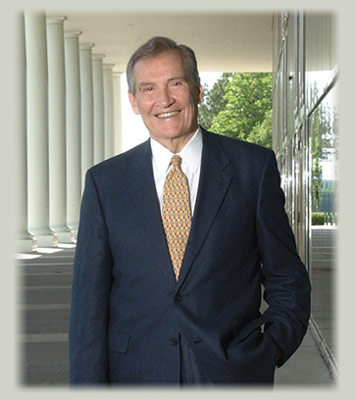 The late Adrian Rogers loved a turn of phrase and had a special gift of “sound-bite wisdom,” his wife, Joyce Rogers said. Now a collection of his sayings is available in the new book “Adrianisms: The Wit and Wisdom of Adrian Rogers,” published by Love Worth Finding Ministries, which he founded...
Read entire article here.
Tuesday, July 04, 2006
Obsessed with conversion?
Lest anyone get the idea that this blog is "obsessed" with pointing out the problems with narrowing parameters of cooperation and over-zealous Bible-bashers, I have decided to post a copy of the following article I just received from AC Press, of the Spanish Evangelical Alliance, commenting on a problem on the other side of the theological spectrum that, in my opinion, makes anything we are dealing with in the SBC pale in comparison.
NEWS from SPAIN
(0) Obsessed with conversion? Is that such a bad thing?
Madrid, June 26th, 2006 (ALC, ENI/ACPress.net).
Can we finally come clean and recognise that the Vatican and the World Council of Churches represent a different religion from that of biblical Christianity? At a recent meeting between delegates from various religions including Buddhism, Hinduism, Islam, Judaism, Yoruba (an African religion) and ‘Christianity’ (as represented by the aforementioned groups), the 27 participants stated that religious freedom implied the duty to respect other beliefs, never denigrate or insult them, and never distort their beliefs to try and make your religion look superior.
The Vatican and the World Council of Churches agreed that religious liberty is a non-negotiable human right, but warned of the ‘need to overcome the obsession with converting others.’ The report recommends working to overcome this ‘obsession’, as in the area of seeking conversions, all religions have made mistakes, according to the report. It goes on to suggest that all religions study their history, and their doctrinal beliefs.
A code of ‘anti-conversion’ conduct is being considered. As a result of such soul-searching, one proposal was to reject “unethical means”, and avoid targeting “vulnerable people” such as children or handicapped people. The participants got the idea of a code of conduct to do with conversion attempts, and the Vatican Committee for Christian Unity and the World Council of Churches (WCC) suggested that inter-religious dialogue on this issue should continue at various levels.
The Catholic Church claims nearly 1,200 million adherents in the world, whilst the WCC represents 347 Protestant and Orthodox Churches in more than 120 countries, with a total membership of over 450 million people.
Have the Vatican and the Geneva-based organisation completely forgotten the words of Jesus: ‘Go into all the world and make disciples’? As the Editorial in ‘Protestante Digital’ (our sister digital magazine in Spanish) points out, such an obsession among evangelicals would be extremely welcome! The Bible teaches us that we need to convert from the system of the world to that of the Lordship of Jesus Christ in order to be saved.
Rome and Geneva are heading down the dreaded path of political correctness, along which all religious belief will become ever more private, never shared with anybody, and therefore never causing anyone any offence. Nor presenting them with the truth of the Gospel nor showing them the way into the kingdom of God either, of course.
Source: ALC/ENI Editing: ACPress.net
NEWS from SPAIN
(0) Obsessed with conversion? Is that such a bad thing?
Madrid, June 26th, 2006 (ALC, ENI/ACPress.net).
Can we finally come clean and recognise that the Vatican and the World Council of Churches represent a different religion from that of biblical Christianity? At a recent meeting between delegates from various religions including Buddhism, Hinduism, Islam, Judaism, Yoruba (an African religion) and ‘Christianity’ (as represented by the aforementioned groups), the 27 participants stated that religious freedom implied the duty to respect other beliefs, never denigrate or insult them, and never distort their beliefs to try and make your religion look superior.
The Vatican and the World Council of Churches agreed that religious liberty is a non-negotiable human right, but warned of the ‘need to overcome the obsession with converting others.’ The report recommends working to overcome this ‘obsession’, as in the area of seeking conversions, all religions have made mistakes, according to the report. It goes on to suggest that all religions study their history, and their doctrinal beliefs.
A code of ‘anti-conversion’ conduct is being considered. As a result of such soul-searching, one proposal was to reject “unethical means”, and avoid targeting “vulnerable people” such as children or handicapped people. The participants got the idea of a code of conduct to do with conversion attempts, and the Vatican Committee for Christian Unity and the World Council of Churches (WCC) suggested that inter-religious dialogue on this issue should continue at various levels.
The Catholic Church claims nearly 1,200 million adherents in the world, whilst the WCC represents 347 Protestant and Orthodox Churches in more than 120 countries, with a total membership of over 450 million people.
Have the Vatican and the Geneva-based organisation completely forgotten the words of Jesus: ‘Go into all the world and make disciples’? As the Editorial in ‘Protestante Digital’ (our sister digital magazine in Spanish) points out, such an obsession among evangelicals would be extremely welcome! The Bible teaches us that we need to convert from the system of the world to that of the Lordship of Jesus Christ in order to be saved.
Rome and Geneva are heading down the dreaded path of political correctness, along which all religious belief will become ever more private, never shared with anybody, and therefore never causing anyone any offence. Nor presenting them with the truth of the Gospel nor showing them the way into the kingdom of God either, of course.
Source: ALC/ENI Editing: ACPress.net
Sunday, July 02, 2006
Calvinism, Free Will, Narnia and Christian Unity
At the risk of exposing my ignorance, especially with those who like to delve into the nuances of technical theological questions, I would like to forward my take on the whole Calvinism-Free Will thing. Obviously, there are passages of Scripture, which, when taken in isolation, seem to favor both sides of the debate. That is, some, one side, and others, the other. Due to this, Christians who claim an equal allegiance to the authority of the Word of God often come down on opposing sides of this issue.
Al Mohler, in the recent debate at the SBC Pastors Conference, said, if I remember correctly, that we as evangelicals accept the principle of "non-contradiction." That is, we believe the Bible, being the authoritative Word of God, does not contradict itself.
To this, I would like to posit the possibility of apparent contradiction, which, in reality is not contradiction. I believe there are two different perspectives from which to look at the questions of predestination and free will (and the various other doctrinal conclusions that stem from your view of these questions). One is the eternal, omniscient perspective of God. The other is the time-bound, limited perspective of man. I believe these two points of view are co-existent, much like England and Narnia in the Chronicles of Narnia. They are two apparently contradictory and co-existing realities, which are each perceived according to the perspective one takes.
Considered from this framework, divine sovereignty is the divine perspective, and human free will, the human perspective. They are both simultaneously true, all depending on the angle from which they are considered. There are many aspects of the divine perspective that are beyond our comprehension as humans. While it is possible for me as a human to theorize about a realm of existence not bound by the limitations of time, it is, at the same time, impossible for me to really comprehend it. In the day-to-day, practical side of life, we normally see things and operate from the human perspective. When we try to see from the divine perspective more than what God has chosen to clearly reveal to us in His Word, we tend to trip ourselves up, and get out of kilter. Yet, by faith, we accept the divine perspective as true.
Because of this understanding of these issues, I find it relatively easy to fellowship with those from either side of the Calvinism-Free Will debate. I just think that those on each side choose to emphasize one perspective over another. They are not necessarily in error. Perhaps a bit unbalanced, in the case of some. But not necessarily in error.
I also don’t spend a whole lot of time sifting through the technical implications of divine sovereignty, accepting that many of them are beyond my limited human capacity to understand. While I accept by faith what the Bible teaches about predestination, I live my life, in the day-to-day, more from the human perspective.
I imagine some of you who have spent more time and effort perusing all the "ins and outs" of this question will be able to completely debunk my thinking on this. And if, biblically, my thinking needs to be debunked, I welcome your input. In any case, I thought I would throw this out as "food for thought."
Al Mohler, in the recent debate at the SBC Pastors Conference, said, if I remember correctly, that we as evangelicals accept the principle of "non-contradiction." That is, we believe the Bible, being the authoritative Word of God, does not contradict itself.
To this, I would like to posit the possibility of apparent contradiction, which, in reality is not contradiction. I believe there are two different perspectives from which to look at the questions of predestination and free will (and the various other doctrinal conclusions that stem from your view of these questions). One is the eternal, omniscient perspective of God. The other is the time-bound, limited perspective of man. I believe these two points of view are co-existent, much like England and Narnia in the Chronicles of Narnia. They are two apparently contradictory and co-existing realities, which are each perceived according to the perspective one takes.
Considered from this framework, divine sovereignty is the divine perspective, and human free will, the human perspective. They are both simultaneously true, all depending on the angle from which they are considered. There are many aspects of the divine perspective that are beyond our comprehension as humans. While it is possible for me as a human to theorize about a realm of existence not bound by the limitations of time, it is, at the same time, impossible for me to really comprehend it. In the day-to-day, practical side of life, we normally see things and operate from the human perspective. When we try to see from the divine perspective more than what God has chosen to clearly reveal to us in His Word, we tend to trip ourselves up, and get out of kilter. Yet, by faith, we accept the divine perspective as true.
Because of this understanding of these issues, I find it relatively easy to fellowship with those from either side of the Calvinism-Free Will debate. I just think that those on each side choose to emphasize one perspective over another. They are not necessarily in error. Perhaps a bit unbalanced, in the case of some. But not necessarily in error.
I also don’t spend a whole lot of time sifting through the technical implications of divine sovereignty, accepting that many of them are beyond my limited human capacity to understand. While I accept by faith what the Bible teaches about predestination, I live my life, in the day-to-day, more from the human perspective.
I imagine some of you who have spent more time and effort perusing all the "ins and outs" of this question will be able to completely debunk my thinking on this. And if, biblically, my thinking needs to be debunked, I welcome your input. In any case, I thought I would throw this out as "food for thought."
Friday, June 30, 2006
Keith Green and "Spiritual Abortion"
I would venture to say that few people influenced my generation (I am 45) for world missions more than Contemporary Christian Music artist Keith Green. Still today, I am continually meeting people on the mission field who credit a big part of their call to missions to the influence of Keith Green. I remember clearly the privilege of seeing him live in concert in Austin, Texas, just a few months before his tragic death at the age of 28, in an airplane crash, together with 2 of his children, in the year 1982.
Keith Green had a passion and authenticity in the Lord’s work matched by very few. The vision is still clearly etched in my mind of the moment that evening in Austin, as he was singing his classic song Grace By Which I Stand, when he came to the line "And like Peter, I can’t even watch and pray for just one hour, and I bet, I could deny you too," and he literally broke down and cried, and was unable to finish the rest of the song.
Keith Green was also known as a fiery prophet, speaking his convictions without mincing words. As we continue to think about evangelism, I want to draw your attention to something Keith Green wrote in a pamphlet entitled What’s Wrong with the Gospel?, in which, in addition to some other subjects, he discussed the concept of what he called "spiritual abortion."
I am painfully aware of the danger of being so concerned of the dangers of "spiritual abortion" that we never get to the point of bringing new Christians to a healthy birth. I am personally convicted that I don’t do near enough to cultivate redemptive relationships with lost people with the hope of one day leading them to surrender their lives completely to Christ. But, as we as Southern Baptists make a greater push, both around the world, and in the States, to lead more people to Christ, and baptize more converts, I think we would do well to heed the warnings of Keith Green, lest in working harder, we begin to see diminishing returns for our work, and are unable to figure out the reason why.
Keith Green had a passion and authenticity in the Lord’s work matched by very few. The vision is still clearly etched in my mind of the moment that evening in Austin, as he was singing his classic song Grace By Which I Stand, when he came to the line "And like Peter, I can’t even watch and pray for just one hour, and I bet, I could deny you too," and he literally broke down and cried, and was unable to finish the rest of the song.
Keith Green was also known as a fiery prophet, speaking his convictions without mincing words. As we continue to think about evangelism, I want to draw your attention to something Keith Green wrote in a pamphlet entitled What’s Wrong with the Gospel?, in which, in addition to some other subjects, he discussed the concept of what he called "spiritual abortion."
As with the altar call, the practice of having someone repeat a prayer with the minister probably originated from the best of intentions. And no doubt, there are those who have "followed through," continuing to pray and walk with God, entering into the path of righteousness through God's infinite grace. But also, like the altar call, the so-called "sinner's prayer" is one of those tools that make it alarmingly easy for someone to consider himself a Christian, when he has absolutely no understanding of what "counting the cost" (Luke 14:28) really means.
The greatest reason I believe that God can be grieved with the current use of such tools as the "altar call" and "sinner's prayer" is because they can take away the conviction of the Holy Spirit prematurely, before the Spirit has time to work repentance leading to salvation. With an emotional splash that usually doesn't last more than a few weeks, we believe we're leading people into the Kingdom, when really we're leading many to hell - by interfering with what the Spirit of God is trying to do in a person's life. Do you hear? Do you understand that this constitutes "spiritual abortion"? Can't you see the eternal consequences of jumping the gun, trying to bring to birth a baby that isn't ready?
We are so afraid that we'll see a "big one that got away," that we'd rather rush someone into a shallow decision, and get the personal gratification of seeing him "go down the aisle," than take the time to fully explain things to him, even if it takes long hours and nights of travailing prayer for his soul. We just don't "have the time" to do things God's way anymore.
But God would rather see one true convert than an ocean full of "decisions." Oh, can't you see what a mess we're in? What we've done to the Gospel? And when those "converts" no longer want to fellowship with us, when they want to go back to their old friends and their old way of life, we have the nerve to call it "backsliding," when we stood in the very way of them ever "front-sliding" toward the cross! Oh, it breaks my heart to think of that awesome day when God will judge those who have "stumbled one of these little ones." (Mark 9:42)
I am painfully aware of the danger of being so concerned of the dangers of "spiritual abortion" that we never get to the point of bringing new Christians to a healthy birth. I am personally convicted that I don’t do near enough to cultivate redemptive relationships with lost people with the hope of one day leading them to surrender their lives completely to Christ. But, as we as Southern Baptists make a greater push, both around the world, and in the States, to lead more people to Christ, and baptize more converts, I think we would do well to heed the warnings of Keith Green, lest in working harder, we begin to see diminishing returns for our work, and are unable to figure out the reason why.
Wednesday, June 28, 2006
Missionary Strategy and Hermeneutics
This post is more about questions than answers.
A poster with the blog name of “mr. t”, who, on his blog, on mission, identifies himself as a fellow missionary in South Asia, left a couple of comments on my last two posts about evangelism, referencing the missionary strategy given by Jesus to his disciples in Matthew 10 and Luke 10 regarding finding a “man of peace” and staying in that same house, rather than going from house to house.
Let me say right off, I am not looking to “pick a fight” with “mr. t”. In fact, I went to his blog, and absolutely loved what all he has to say. I highly recommend it. However, his recent comments, which are representative of a good bit of recent thinking by quite a few missions strategists, bring up some questions in my mind that I think are worthy of discussion.
The basic idea is that, as church planters, our main goal upon arriving in a new city, town, or people group, is to identify the “person of peace.” Once we find that person, who will many times be our first disciple, he or she will become the key to reaching the rest of the city, town, or people group. “Mr. t” makes the additional assertion that he believes “there are those persons of peace and worthy households out there among every people.” It is basically a matter of persevering until we find them.
For a good many contexts around the world, I believe this is great missiology. God is blessing it, people are being saved, and churches planted. However, as a foolproof, cookie-cutter, promise from Scripture, I have my doubts as to its hermeneutical validity.
First of all, many who use these passages as their strategy guide conveniently omit the part about not taking along “a purse, or bag, or shoes.” Some also by-pass the part about healing the sick. But my main concern here has to do with the part about “shaking the dust off your feet.” I honestly don’t know how to transfer the biblical principle here to our modern-day missionary context. I mean, it seems like the disciples knew pretty soon when it was time to leave town and shake the dust off their feet. Both William Carey and Adoniram Judson went 7 years each before baptizing their first convert, though.
Some make reference to the worshippers “from every nation, tribe, people and tongue” gathered around the throne in the book of Revelation, and say we thus have biblical warrant to expect a positive response to the preaching of the gospel from every people group segment. While this idea is appealing to me, I can’t help but wonder about various entire people groups from the Old Testament who in the last days were to be the objects of God’s wrath. And what about Bethsaida, Chorazin, and Capernaum in the New Testament (Luke 10:13-15)? I’ve always wondered how we specifically define nations, tribes, peoples and tongues. John Piper does as good a job with this as anyone in Let the Nations be Glad. But he still doesn’t answer some of my questions. What about, for example, entire generations of people groups in the Dark Ages without one person who we would today call an “evangelical believer”?
Then there are those who point to the supposed missionary strategy of Paul, stating he had the habit of staying in towns just enough time to preach the gospel, gather a few converts, name elders among them, and then leave—all in a period of a few days or weeks. My impression, upon reading Acts, is a bit different. I see Paul, towards the end of his missionary ministry, after he had learned some important lessons, staying on 3 years in Ephesus, setting up his ministry training school at the Lecture Hall of Tyrannus, and having more strategic impact there than anywhere else in his previous travels. I also see New Testament “missionaries” like Timothy and Titus, going back to places where Paul had been, in order finish the work he had started.
What’s my main point in all of this? In missions, one size does not fit all. Different situations and different spiritual and cultural contexts demand different strategical approaches. There is a time to reap. But there is also a time to plow, a time to sow, and a time to water. And even perhaps a time to “shake the dust off your feet.”
A poster with the blog name of “mr. t”, who, on his blog, on mission, identifies himself as a fellow missionary in South Asia, left a couple of comments on my last two posts about evangelism, referencing the missionary strategy given by Jesus to his disciples in Matthew 10 and Luke 10 regarding finding a “man of peace” and staying in that same house, rather than going from house to house.
Let me say right off, I am not looking to “pick a fight” with “mr. t”. In fact, I went to his blog, and absolutely loved what all he has to say. I highly recommend it. However, his recent comments, which are representative of a good bit of recent thinking by quite a few missions strategists, bring up some questions in my mind that I think are worthy of discussion.
The basic idea is that, as church planters, our main goal upon arriving in a new city, town, or people group, is to identify the “person of peace.” Once we find that person, who will many times be our first disciple, he or she will become the key to reaching the rest of the city, town, or people group. “Mr. t” makes the additional assertion that he believes “there are those persons of peace and worthy households out there among every people.” It is basically a matter of persevering until we find them.
For a good many contexts around the world, I believe this is great missiology. God is blessing it, people are being saved, and churches planted. However, as a foolproof, cookie-cutter, promise from Scripture, I have my doubts as to its hermeneutical validity.
First of all, many who use these passages as their strategy guide conveniently omit the part about not taking along “a purse, or bag, or shoes.” Some also by-pass the part about healing the sick. But my main concern here has to do with the part about “shaking the dust off your feet.” I honestly don’t know how to transfer the biblical principle here to our modern-day missionary context. I mean, it seems like the disciples knew pretty soon when it was time to leave town and shake the dust off their feet. Both William Carey and Adoniram Judson went 7 years each before baptizing their first convert, though.
Some make reference to the worshippers “from every nation, tribe, people and tongue” gathered around the throne in the book of Revelation, and say we thus have biblical warrant to expect a positive response to the preaching of the gospel from every people group segment. While this idea is appealing to me, I can’t help but wonder about various entire people groups from the Old Testament who in the last days were to be the objects of God’s wrath. And what about Bethsaida, Chorazin, and Capernaum in the New Testament (Luke 10:13-15)? I’ve always wondered how we specifically define nations, tribes, peoples and tongues. John Piper does as good a job with this as anyone in Let the Nations be Glad. But he still doesn’t answer some of my questions. What about, for example, entire generations of people groups in the Dark Ages without one person who we would today call an “evangelical believer”?
Then there are those who point to the supposed missionary strategy of Paul, stating he had the habit of staying in towns just enough time to preach the gospel, gather a few converts, name elders among them, and then leave—all in a period of a few days or weeks. My impression, upon reading Acts, is a bit different. I see Paul, towards the end of his missionary ministry, after he had learned some important lessons, staying on 3 years in Ephesus, setting up his ministry training school at the Lecture Hall of Tyrannus, and having more strategic impact there than anywhere else in his previous travels. I also see New Testament “missionaries” like Timothy and Titus, going back to places where Paul had been, in order finish the work he had started.
What’s my main point in all of this? In missions, one size does not fit all. Different situations and different spiritual and cultural contexts demand different strategical approaches. There is a time to reap. But there is also a time to plow, a time to sow, and a time to water. And even perhaps a time to “shake the dust off your feet.”
Sunday, June 25, 2006
Hard Soil
A few years ago, a colleague and friend of mine, who was a missionary at that time in the city of Ibi, Spain (pop. 20,000), over a period of several years, knocked on every door in the city of Ibi at least twice, and in some cases three times, with the intent of sharing the plan of salvation to those who came to the door. When I first heard of this, I was amazed, and I continue to be amazed at the boldness, faithfulness, and dedication of this dear brother in Christ.
After several years of doing this, my colleague shared with me that he had not seen one person give their heart to Christ as a result of his efforts. Upon arriving in Ibi, he did not know of one single evangelical believer in town, and upon leaving, several years later, he still did not know of one single evangelical believer.
In a technical sense, you could say what my friend was doing was “sowing”. He was literally “spreading the seed” of the Gospel.
In the city of Mérida (pop. 50,000), where my wife and I worked for 5 years, we began in a similar situation to that of my friend in Ibi, though there were a handful of believers in town. For the first couple of years, we did (with the help of a number of other people) extensive literature distribution, open-air preaching, and door-to-door work, lending videos of the Jesus film. However, we saw no real response from these “sowing” attempts. A few years later, though, we were blessed to be able to leave a congregation of about 25 baptized believers, and an average Sunday morning attendance of about 70, in the hands of a team of local leaders.
The difference? First of all, I would point to the sovereign grace of God, who chooses to work whenever and wherever He wills. Next, I would point to massive efforts in prayer, through various prayer-walking teams, and other methods of prayer mobilization. Finally, I would point towards personal relationships, social ministry, and pastoral care of needy and hurting people, which are the areas from which we saw the most fruit during our time there.
Why am I making this comparison? To build myself up, and cut my friend down? By no means. If rewards in heaven are based on our faithfulness here on earth, I am pretty sure he will have more than me. Compared to many contexts in other parts of the world, neither one of us saw much fruit from our labors.
But I do think there are some lessons to be learned in regard to how we approach evangelism in different contexts. Following the agricultural analogy, it is often necessary to “plow” the ground, and add “fertilizer” to it before spreading valuable seed on hard, unproductive ground.
Jesus, in the Parable of the Sower, tells us there are different types of soil. In a “micro” sense, I believe the soil is the hearts of individuals. But in a “macro” sense, I believe it is also true that the soil is the cultural context in which we live and work. And, for some reason, there appear to be some “cultural context soils” where it is a lot more difficult to find “individual heart soils” ready to receive a “one-off” Gospel presentation, and respond positively, than others.
Some would point out that the sower in the parable spread the seed in all different kinds of soil. But I wonder whether, in unproductive, hard soil, there is something better we can do than just “spread seed”. Matthew 13:23 says “But the one who received the seed that fell on good soil is the man who hears the word and understands it.” I think that individuals’ understanding of the Gospel is often clouded by their cultural context. We can help to “plow” and “fertilize” the “soil” of their hearts, first and foremost, by prayer, and next, by building personal relationships, and seeking to understand their cultural context better, in order to make sure the message we are intending to communicate is really the message that they are “understanding”.
After several years of doing this, my colleague shared with me that he had not seen one person give their heart to Christ as a result of his efforts. Upon arriving in Ibi, he did not know of one single evangelical believer in town, and upon leaving, several years later, he still did not know of one single evangelical believer.
In a technical sense, you could say what my friend was doing was “sowing”. He was literally “spreading the seed” of the Gospel.
In the city of Mérida (pop. 50,000), where my wife and I worked for 5 years, we began in a similar situation to that of my friend in Ibi, though there were a handful of believers in town. For the first couple of years, we did (with the help of a number of other people) extensive literature distribution, open-air preaching, and door-to-door work, lending videos of the Jesus film. However, we saw no real response from these “sowing” attempts. A few years later, though, we were blessed to be able to leave a congregation of about 25 baptized believers, and an average Sunday morning attendance of about 70, in the hands of a team of local leaders.
The difference? First of all, I would point to the sovereign grace of God, who chooses to work whenever and wherever He wills. Next, I would point to massive efforts in prayer, through various prayer-walking teams, and other methods of prayer mobilization. Finally, I would point towards personal relationships, social ministry, and pastoral care of needy and hurting people, which are the areas from which we saw the most fruit during our time there.
Why am I making this comparison? To build myself up, and cut my friend down? By no means. If rewards in heaven are based on our faithfulness here on earth, I am pretty sure he will have more than me. Compared to many contexts in other parts of the world, neither one of us saw much fruit from our labors.
But I do think there are some lessons to be learned in regard to how we approach evangelism in different contexts. Following the agricultural analogy, it is often necessary to “plow” the ground, and add “fertilizer” to it before spreading valuable seed on hard, unproductive ground.
Jesus, in the Parable of the Sower, tells us there are different types of soil. In a “micro” sense, I believe the soil is the hearts of individuals. But in a “macro” sense, I believe it is also true that the soil is the cultural context in which we live and work. And, for some reason, there appear to be some “cultural context soils” where it is a lot more difficult to find “individual heart soils” ready to receive a “one-off” Gospel presentation, and respond positively, than others.
Some would point out that the sower in the parable spread the seed in all different kinds of soil. But I wonder whether, in unproductive, hard soil, there is something better we can do than just “spread seed”. Matthew 13:23 says “But the one who received the seed that fell on good soil is the man who hears the word and understands it.” I think that individuals’ understanding of the Gospel is often clouded by their cultural context. We can help to “plow” and “fertilize” the “soil” of their hearts, first and foremost, by prayer, and next, by building personal relationships, and seeking to understand their cultural context better, in order to make sure the message we are intending to communicate is really the message that they are “understanding”.
Thursday, June 22, 2006
Ripe for Harvest?
I tell you, open your eyes and look at the fields! They are ripe for harvest. Even now the reaper draws his wages, even now he harvests the crop for eternal life, so that the sower and the reaper may be glad together. Thus the saying ‘One sows and another reaps’ is true. I sent you to reap what you have not worked for. Others have done the hard work, and you have reaped the benefits of their labor. John 4.35-38
We have been told that baptisms are down in the Southern Baptist Convention. We have been told we need to re-double our efforts in witnessing. We have been told the reason for the decline is our lack of commitment and relaxed attitude toward soul-winning. Some have suggested that perhaps we need to tweak our methods.
PLEASE HEAR ME CLEARLY!!! I AM NOT AGAINST ENCOURAGING OUR PEOPLE TO BE MORE FAITHFUL IN THEIR EVANGELISTIC EFFORTS! AND I AM NOT AGAINST WORKING TO IMPROVE OUR METHODS IN COMMUNICATING THE GOSPEL MESSAGE!
However, I am not so sure that lack of evangelistic zeal or poor witnessing techniques are mostly to blame for the decline in baptisms.
No one in their right mind would call Western Europe, or more specifically Spain, where God has given me the privilege of serving Him for the last 16 years, a great "harvest field." Several years ago, I came across the little book Sowing, Reaping, Keeping, written by Lawrence Singlehurst, Director of Youth With a Mission, England. In this amazingly simple yet profound book, Singlehurst cogently makes the point that evangelism is made up not only of "reaping", but also of "sowing" and "keeping". And, in order to be most effective at the evangelistic task, it is necessary to analyze the context in which one finds oneself, and adapt the strategy accordingly. Upon my recommendation, the IMB Western Europe leadership has since made Sowing, Reaping, Keeping required reading for all new missionaries to Western Europe.
Another book with a similar message is Finding Common Ground, by Campus Crusade for Christ worker Tim Downs. I cannot recommend these two books strongly enough. In order to capture the force of the arguments made, you must get the books and read them for yourself.However, in light of recent admonitions to re-double our efforts at harvesting in the context of Southern Baptists in the United States, I want to leave you with some choice quotes from Finding Common Ground...
We have been told that baptisms are down in the Southern Baptist Convention. We have been told we need to re-double our efforts in witnessing. We have been told the reason for the decline is our lack of commitment and relaxed attitude toward soul-winning. Some have suggested that perhaps we need to tweak our methods.
PLEASE HEAR ME CLEARLY!!! I AM NOT AGAINST ENCOURAGING OUR PEOPLE TO BE MORE FAITHFUL IN THEIR EVANGELISTIC EFFORTS! AND I AM NOT AGAINST WORKING TO IMPROVE OUR METHODS IN COMMUNICATING THE GOSPEL MESSAGE!
However, I am not so sure that lack of evangelistic zeal or poor witnessing techniques are mostly to blame for the decline in baptisms.
No one in their right mind would call Western Europe, or more specifically Spain, where God has given me the privilege of serving Him for the last 16 years, a great "harvest field." Several years ago, I came across the little book Sowing, Reaping, Keeping, written by Lawrence Singlehurst, Director of Youth With a Mission, England. In this amazingly simple yet profound book, Singlehurst cogently makes the point that evangelism is made up not only of "reaping", but also of "sowing" and "keeping". And, in order to be most effective at the evangelistic task, it is necessary to analyze the context in which one finds oneself, and adapt the strategy accordingly. Upon my recommendation, the IMB Western Europe leadership has since made Sowing, Reaping, Keeping required reading for all new missionaries to Western Europe.
Another book with a similar message is Finding Common Ground, by Campus Crusade for Christ worker Tim Downs. I cannot recommend these two books strongly enough. In order to capture the force of the arguments made, you must get the books and read them for yourself.However, in light of recent admonitions to re-double our efforts at harvesting in the context of Southern Baptists in the United States, I want to leave you with some choice quotes from Finding Common Ground...
Many of our modern churches and evangelistic movements were founded during a time when the American fields were abundantly white for harvest. But the fields of the fifties and sixties, like the fields of Jesus’ time, were ripe for harvest because of countless sowers who had worked to create a soil that was conducive to the growth of the gospel. The "soil" of our society is the whole environment in which Christians seek to live and minister. It is the culture, the atmosphere, the worldview, the zeitgeist—the "spirit of the time" in which we live. In each generation, Christians must attempt to plant the seed of the Word of God in the soil of the prevailing culture. Historically, some soils have been better than others. In each case, the nature of the soil determines what kind of life it will support…
There is no doubt that the soil of our society has eroded significantly in a short period of time. Over the last forty years, many para-church organizations and churches have struggled with a thinning harvest in America. In an attempt to recapture the glory of past harvests we have recruited more harvesters, sharpened our sickles and scythes, and challenged our workers to greater commitment and longer hours.
Maybe it’s time to analyze the soil. Maybe it’s time to sow. (pp. 16-17)
Almost thirty years ago, as a young college student and a very new Christian, I was trained in the basic principles of evangelism. I learned to present the gospel using a simple tract, the Four Spiritual Laws. I discussed that little booklet with roommates, fraternity members, grad students, international students, and even professors. I presented the gospel to literally hundreds of people during my four years of college, and I found a tremendous amount of openness—even eagerness—to discuss spiritual things. In those days, I could assume the openness of the average hearer. My sole filter when considering a potential listener was, "Are you busy?" Today, many Christians attempting to do evangelism find that they now must assume the disinterest, or even the hostility, of the average hearer. As a result, the statistics on evangelistic success from most ministries are much lower than they were thirty years ago.
What accounts for this change? Our first instinct has been to examine ourselves. Have we lost our first love? Are we lacking in dedication or commitment? Are we as bold as we used to be? Our second response has been to reconsider our methodology. Is this booklet out-of-date? Are we behind the times? Should we expand this, enlarge this, reprint it in four-color, or make it available on CD-ROM? The option we rarely consider—perhaps because it sounds unspiritual—is that times have changed. Perhaps our nation has entered a different phase of the harvest cycle. Perhaps our culture’s fields are not as ripe as they used to be.
In John 4, Jesus uttered His famous words, "I tell you, open your eyes and look at the fields! They are ripe for harvest" (v. 35 NIV). Christians have often assumed that Jesus was stating a timeless spiritual principle: Now that the Messiah has come, a new era has begun. The fields will always be white for harvest. Is that what Jesus was saying? If so, He picked a strange metaphor. In actual farming, a time of harvest is followed by a time of rest, followed by a time of sowing, and the process begins all over again. In farming, no field is always ripe for harvest Was Jesus telling us that His fields were different, in that they were always ripe? Or was He tellling His disciples something about the day in which they lived? "But when the fullness of the time came," Galatians tells us, "God sent forth His Son…" (4:4). Much has been written about the "fullness of the time" and why the Messiah came when He did. Could it be that a part of the "fullness of the time" was that the fields of Jesus’ time had been throroughly sown and were now abundantly—perhaps uniquely—ripe for harvest? (pp. 102-03)
Let me state my concern plainly. Because we enjoyed such evangelistic success in the sixties, we told ourselves that the American fields would always be white for harvest. Because harvesting was so effective, we told ourselves that harvesting was the only technique we would ever need. If the fields are eternally ripe, we only need to harvest. Why bother with anything else?
So we teach each new generation of Christians how to harvest—only how to harvest—and we assure them that the fields around them are ripe and ready for the picking, if only they will have the faith and the boldness to go. Our books and our training videos are loaded with illustrations that show how easy it is and how open people are to hearing the gospel. But when they go, they sometimes have a rude awakening. The fields around them do not always seem ripe. People are not as eager and open as they expected—sometimes they’re even hostile. And so, because harvesting is all they know how to do, they begin to withdraw from the fields. (p. 105)
Wednesday, June 21, 2006
Denominational Idolatry Reproved
I invite you to check out the following post on Strange BaptistFire referencing the Introductory Sermon to the Georgia Baptist Convention in 1859 by C. D. Mallary, as published recently in the Winter 2006 Founders Journal.
Denominational Idolatry Reproved
It is interesting, refreshing, and confirmatory for me to see that Mallary was saying much the same things back in 1859 that I have been trying to communicate for the last several months on various posts on this blog.
Denominational Idolatry Reproved
It is interesting, refreshing, and confirmatory for me to see that Mallary was saying much the same things back in 1859 that I have been trying to communicate for the last several months on various posts on this blog.
Monday, June 19, 2006
Joyce Rogers Testimony Video Clip

For those of you who either missed it, or would like to see it again, here is the link for the video clip of my Mom's testimony and tribute to my Dad at the Pastors Conference at the recent Southern Baptist Convention in Greensboro.
Joyce Rogers Testimony Video Clip
Friday, June 16, 2006
The Blessings of Blogging
If you had told me a year ago that I would be into blogging now, I probably wouldn’t have believed you. But for me, this "adventure into blogging" these past months has been one of the most positive developments of my life.
Blogging for me is a lot like journaling, with the main exception that it is open for the public to see. I have always thought that someday I might like to write, but until I started blogging, never really knew where to get started. Having a blog has finally given me an excuse to put down into words ideas about which I have thought for a long time, but had never gotten around to writing down.
Another blessing of blogging is the "blogging community." Through reading others’ blogs, and commenting on them, and from interacting with those who comment on your blog, you begin to build relationships with people who share common interests. You meet and interact with people in other parts of the world, with whom you would most likely never have interacted otherwise.
Just as "iron sharpens iron," the comments of readers and other bloggers, whether supportive or antagonistic, help you to refine your ideas, and to think through issues in new ways. When you write something on your blog, and you leave the comments section open, you had better be prepared to defend yourself in the "marketplace of ideas."
At the recent Southern Baptist Convention in Greensboro, I was able to meet a good number of people in the "blogging community," who, up to that time, had been just a name, or at most, a photo on the screen, for me. People like Micah Fries, Paul Fries, John Stickley, Alan Cross, Tim Sweatman, Jeff Young, Wes Kinney, Travis Hilton, Kiki Cherry, Bowden McElroy, Jason Helmbacher, Wyman Dobbs, David Phillips, Art Rogers, Marty Duren, Kevin Bussey, Steve McCoy, Joe Thorn... Through blogging, I was able to renew contact with my old college friend, Wade Burleson, and his dad, Paul Burleson. I also discovered that because of blogging, other people knew me. A number of people I had never met, as well as a few I had met before, told me they were reading my blog.
Through blogging, it is also possible to influence others. Although it is almost impossible to estimate to what extent, many have suggested that the influence of bloggers played a major role in the election of Frank Page as President of the Southern Baptist Convention. It is the hope of many that blogging might be able to have a positive influence in the adoption of policies at the International Mission Board, which in turn might have an influence in winning a lost world to Christ.
During one of the sessions at the recent SBC, it was suggested that blogging takes away time from other more important things, such as evangelism and missions. My personal experience has been that those who are involved in blogging are often the most passionate about evangelism and missions. They blog precisely because they feel deeply about things, and feel the need to communicate their ideas and feelings to others. While it is true that it is possible to get so engrossed in blogging that you neglect other areas of your life, the same is true about any number of other activities in which we engage. The problem is not blogging, but rather lack of discipline.
It is also possible to be irresponsible with what you write on your blog. While there is plenty of room for good-natured humor, the temptation to be sarcastic and biting is all too near when writing about others who are not there in front of you at the time. It is possible to start false rumors based upon innuendo or unsubstantiated claims. However, as previously mentioned, whenever you do this, if you leave the comments section open, you had better be ready to defend yourself.
In actuality, I believe that overall, the openness and vulnerability of an interactive blog provides a good, healthy setting for developing Christian community. There is a lot of exhortation, sharing of concerns and needs, confession of weaknesses, and general encouragement that happens on many blogs. There is also rebuke and correction. Through it all, friendships are developed, and people’s lives are built up and edified.
I, for one, am thankful for the blessing of blogging.
P.S. While preparing this post, I just discovered this over at OK Preacher’s Christian Resource Center blog, referencing the original post at Under the Acacias. I think these are some excellent guidelines to keep in mind while blogging…
1. Do not let any unwholesome talk come out of your blog, but only what is helpful for building others up according to their needs. (Eph 4:29)
Is what comes from our blogs wholesome? Is what we are writing helpful for building others up? Or does it tear them down?
2. Blog about others as you would have them blog about you (Lk 6:31)
The golden rule. If we blog about others, do we do it with love, respect, and integrity?
3. But in your blogs set apart Christ as Lord. Always be prepared to give an answer to everyone who asks you to give the reason for the hope that you have. But do this with gentleness and respect, keeping a clear conscience... (1 Pet 3:15,16)
Are we consciously allowing Jesus Christ to rule over our blogs? When people disagree with us, do we respond with gentleness and respect?
4. Each one should use whatever blog he has received to serve others, faithfully administering God's grace in its various forms (1 Pet 4:10)
Are we using our blogs to serve others? To encourage, stimulate, and help others? To build them up in Christ? Or to blow our own trumpet?
5. Let us therefore make every effort to blog what leads to peace and to mutual edification. (Ro 14:19) And Be completely humble and gentle; be patient, bearing with one another in love. Make every effort to keep the unity of the Spirit through the blog of peace (Eph 4:2)
Do we make every effort to maintain peace and unity in the body of Christ? Or do we focus on what divides us? When we disagree, are we humble and gentle?
6. Accept him whose blog is weak, without passing judgment on disputable matters...Let us stop blogging judgment on one another... whatever you believe about these things keep between yourself and God. Blessed is the man who does not condemn himself by what he approves. (Ro 14 1-22)
Let us be careful not to condemn ourselves by dividing the body of Christ over disputable matters, or by judging the spiritual state of our brothers and sisters with whom we disagree.
7. Finally, brothers, whatever is true, whatever is noble, whatever is right, whatever is pure, whatever is lovely, whatever is admirable--if anything is excellent or praiseworthy - blog about such things. (Phil 4:8)
Amen!
Blogging for me is a lot like journaling, with the main exception that it is open for the public to see. I have always thought that someday I might like to write, but until I started blogging, never really knew where to get started. Having a blog has finally given me an excuse to put down into words ideas about which I have thought for a long time, but had never gotten around to writing down.
Another blessing of blogging is the "blogging community." Through reading others’ blogs, and commenting on them, and from interacting with those who comment on your blog, you begin to build relationships with people who share common interests. You meet and interact with people in other parts of the world, with whom you would most likely never have interacted otherwise.
Just as "iron sharpens iron," the comments of readers and other bloggers, whether supportive or antagonistic, help you to refine your ideas, and to think through issues in new ways. When you write something on your blog, and you leave the comments section open, you had better be prepared to defend yourself in the "marketplace of ideas."
At the recent Southern Baptist Convention in Greensboro, I was able to meet a good number of people in the "blogging community," who, up to that time, had been just a name, or at most, a photo on the screen, for me. People like Micah Fries, Paul Fries, John Stickley, Alan Cross, Tim Sweatman, Jeff Young, Wes Kinney, Travis Hilton, Kiki Cherry, Bowden McElroy, Jason Helmbacher, Wyman Dobbs, David Phillips, Art Rogers, Marty Duren, Kevin Bussey, Steve McCoy, Joe Thorn... Through blogging, I was able to renew contact with my old college friend, Wade Burleson, and his dad, Paul Burleson. I also discovered that because of blogging, other people knew me. A number of people I had never met, as well as a few I had met before, told me they were reading my blog.
Through blogging, it is also possible to influence others. Although it is almost impossible to estimate to what extent, many have suggested that the influence of bloggers played a major role in the election of Frank Page as President of the Southern Baptist Convention. It is the hope of many that blogging might be able to have a positive influence in the adoption of policies at the International Mission Board, which in turn might have an influence in winning a lost world to Christ.
During one of the sessions at the recent SBC, it was suggested that blogging takes away time from other more important things, such as evangelism and missions. My personal experience has been that those who are involved in blogging are often the most passionate about evangelism and missions. They blog precisely because they feel deeply about things, and feel the need to communicate their ideas and feelings to others. While it is true that it is possible to get so engrossed in blogging that you neglect other areas of your life, the same is true about any number of other activities in which we engage. The problem is not blogging, but rather lack of discipline.
It is also possible to be irresponsible with what you write on your blog. While there is plenty of room for good-natured humor, the temptation to be sarcastic and biting is all too near when writing about others who are not there in front of you at the time. It is possible to start false rumors based upon innuendo or unsubstantiated claims. However, as previously mentioned, whenever you do this, if you leave the comments section open, you had better be ready to defend yourself.
In actuality, I believe that overall, the openness and vulnerability of an interactive blog provides a good, healthy setting for developing Christian community. There is a lot of exhortation, sharing of concerns and needs, confession of weaknesses, and general encouragement that happens on many blogs. There is also rebuke and correction. Through it all, friendships are developed, and people’s lives are built up and edified.
I, for one, am thankful for the blessing of blogging.
P.S. While preparing this post, I just discovered this over at OK Preacher’s Christian Resource Center blog, referencing the original post at Under the Acacias. I think these are some excellent guidelines to keep in mind while blogging…
1. Do not let any unwholesome talk come out of your blog, but only what is helpful for building others up according to their needs. (Eph 4:29)
Is what comes from our blogs wholesome? Is what we are writing helpful for building others up? Or does it tear them down?
2. Blog about others as you would have them blog about you (Lk 6:31)
The golden rule. If we blog about others, do we do it with love, respect, and integrity?
3. But in your blogs set apart Christ as Lord. Always be prepared to give an answer to everyone who asks you to give the reason for the hope that you have. But do this with gentleness and respect, keeping a clear conscience... (1 Pet 3:15,16)
Are we consciously allowing Jesus Christ to rule over our blogs? When people disagree with us, do we respond with gentleness and respect?
4. Each one should use whatever blog he has received to serve others, faithfully administering God's grace in its various forms (1 Pet 4:10)
Are we using our blogs to serve others? To encourage, stimulate, and help others? To build them up in Christ? Or to blow our own trumpet?
5. Let us therefore make every effort to blog what leads to peace and to mutual edification. (Ro 14:19) And Be completely humble and gentle; be patient, bearing with one another in love. Make every effort to keep the unity of the Spirit through the blog of peace (Eph 4:2)
Do we make every effort to maintain peace and unity in the body of Christ? Or do we focus on what divides us? When we disagree, are we humble and gentle?
6. Accept him whose blog is weak, without passing judgment on disputable matters...Let us stop blogging judgment on one another... whatever you believe about these things keep between yourself and God. Blessed is the man who does not condemn himself by what he approves. (Ro 14 1-22)
Let us be careful not to condemn ourselves by dividing the body of Christ over disputable matters, or by judging the spiritual state of our brothers and sisters with whom we disagree.
7. Finally, brothers, whatever is true, whatever is noble, whatever is right, whatever is pure, whatever is lovely, whatever is admirable--if anything is excellent or praiseworthy - blog about such things. (Phil 4:8)
Amen!
Tuesday, June 13, 2006
Healthy Pride, Gratefulness & Hope
Back in May, I added my name to the list of people who signed the "Memphis Declaration". Point 1 of that declaration states:
We publicly repent of triumphalism about Southern Baptist causes and narcissism about Southern Baptist ministries which have corrupted our integrity in assessing our denomination bureaucracy, our churches, and our personal witness in light of the sobering exhortations of Scripture.
Therefore, we commit ourselves to a renewed pledge to integrity demonstrated by accountability in our denomination, both before God and each other, lest in preaching the meekness of our Lord to others we ourselves will be found guilty of wicked, sinful pride.
I want to be careful to not contradict what I signed then in what I am going to say now.
I am proud today to be a part of the Southern Baptist Convention. I am full of hope that God has great things ahead for us as a denomination.
While I feel to gloat over the results of the presidential election would not be glorifying to God, I do believe that the first-round absolute majority of votes for Frank Page sends a strong message that we as Southern Baptists are a people who believe in cooperation, both one with another in our support of the Cooperative Program, as well as with the wider Body of Christ in order to win a lost world to Christ.
I am hopeful for the prospects of all Southern Baptists, both those who voted for Dr. Page, and those who voted for Dr. Floyd and Dr. Sutton, uniting under Dr. Page's leadership as we move forward in our commitment to be the best stewards possible in our commitment to do our part, together with the rest of the Body of Christ throughout the world, in the fulfillment of the Great Commission.
I also want to say I am especially proud of my mother, and the bold stand she took in proclaiming that my father, "Adrian Rogers would not have been a part of what is going on in some parts of our convention today, getting narrower and narrower about very highly interpretive issues." She truly was a major factor behind the strength of my father's ministry when he was alive, and, now that she must go on without him, continues to be a remarkably strong and courageous woman.
I am also deeply grateful for the two special times, one at the Pastors' Conference, and the other tonight during the Convention program, commemorating my father and recognizing his contribution to the life of the Southern Baptist Convention. I am also proud, humbled and challenged, all at the same time, as a result of the legacy my dear father left behind, and the many testimonies of how his life and ministry impacted others.
On another note, the issues that have caused concern during the past months related to the IMB have still not completely been solved. But I am thankful that a process is now underway in order to address these concerns. I sincerely believe this is not about proving who is right and who is wrong. It is rather about getting back on track, and joining hands one with another, laying aside our differences of opinion on secondary issues, and moving ahead in our commitment to work towards the fulfillment of the Great Commission. I, for one, commit to pray for this process in the days ahead, and urge each of you who read this to do the same. May the end result be that no one is hurt or shamed, but rather that only the name of Jesus is lifted up before a lost and dying world that desperately needs to hear an authentic, heartbroken presentation of the Gospel of grace and forgiveness that is ours thanks to the price that was paid on Calvary through the blood that was shed, and the sacrifice that Jesus made for us.
We publicly repent of triumphalism about Southern Baptist causes and narcissism about Southern Baptist ministries which have corrupted our integrity in assessing our denomination bureaucracy, our churches, and our personal witness in light of the sobering exhortations of Scripture.
Therefore, we commit ourselves to a renewed pledge to integrity demonstrated by accountability in our denomination, both before God and each other, lest in preaching the meekness of our Lord to others we ourselves will be found guilty of wicked, sinful pride.
I want to be careful to not contradict what I signed then in what I am going to say now.
I am proud today to be a part of the Southern Baptist Convention. I am full of hope that God has great things ahead for us as a denomination.
While I feel to gloat over the results of the presidential election would not be glorifying to God, I do believe that the first-round absolute majority of votes for Frank Page sends a strong message that we as Southern Baptists are a people who believe in cooperation, both one with another in our support of the Cooperative Program, as well as with the wider Body of Christ in order to win a lost world to Christ.
I am hopeful for the prospects of all Southern Baptists, both those who voted for Dr. Page, and those who voted for Dr. Floyd and Dr. Sutton, uniting under Dr. Page's leadership as we move forward in our commitment to be the best stewards possible in our commitment to do our part, together with the rest of the Body of Christ throughout the world, in the fulfillment of the Great Commission.
I also want to say I am especially proud of my mother, and the bold stand she took in proclaiming that my father, "Adrian Rogers would not have been a part of what is going on in some parts of our convention today, getting narrower and narrower about very highly interpretive issues." She truly was a major factor behind the strength of my father's ministry when he was alive, and, now that she must go on without him, continues to be a remarkably strong and courageous woman.
I am also deeply grateful for the two special times, one at the Pastors' Conference, and the other tonight during the Convention program, commemorating my father and recognizing his contribution to the life of the Southern Baptist Convention. I am also proud, humbled and challenged, all at the same time, as a result of the legacy my dear father left behind, and the many testimonies of how his life and ministry impacted others.
On another note, the issues that have caused concern during the past months related to the IMB have still not completely been solved. But I am thankful that a process is now underway in order to address these concerns. I sincerely believe this is not about proving who is right and who is wrong. It is rather about getting back on track, and joining hands one with another, laying aside our differences of opinion on secondary issues, and moving ahead in our commitment to work towards the fulfillment of the Great Commission. I, for one, commit to pray for this process in the days ahead, and urge each of you who read this to do the same. May the end result be that no one is hurt or shamed, but rather that only the name of Jesus is lifted up before a lost and dying world that desperately needs to hear an authentic, heartbroken presentation of the Gospel of grace and forgiveness that is ours thanks to the price that was paid on Calvary through the blood that was shed, and the sacrifice that Jesus made for us.
Monday, June 12, 2006
Letter from IMB Regional Leader Rodney Hammer
IMB Regional Leader for Central & Eastern Europe Rodney Hammer has sent a letter to Baptist Press and to Marty Duren's SBC Outpost expressing his concerns over recent developments at the IMB related to new policies and the Board of Trustees. We will see if BP publishes this when their new releases come out today. In any case, I wanted to do what I can in the meantime to see that this very important letter gets the maximum circulation possible.
Rodney Hammer's letter at SBC Outpost
Rodney Hammer's letter at SBC Outpost
Friday, June 09, 2006
It's all about Stewardship
Yes, that very "churchy" sounding word we heard growing up, and always thought it had something to do with getting the people to put more money in the offering plate. Rick Warren, in Chapter 5 of The Purpose-Driven Life, says that one of three biblical "life metaphors" is "Life on earth is a Trust." In other words, one day we will be held to account for the "talents" we were given here on earth and what we did with them. And that vision ought to drive everything we do.
As I see it, as Christians, we have all been given the "trust" of fulfilling the Great Commission. Not doing it ourselves, but each one contributing his/her "grain of sand" to see that it is fulfilled. And it is not enough to just say we are working, each in his/her own way, toward the fulfillment of the Great Commission. If we are faithful stewards, we will want to do our very best to get the biggest "return" possible from our "investment".
As Southern Baptists, we have been entrusted with the oversight of a whole lot of Kingdom resources through the Cooperative Program, and the various SBC agencies. I believe the evidence is conclusive that we are getting a better "return" on our "investment" as we learn to cooperate with other Great Commission Christians for the fulfillment of the Great Commission. To take a step back on that, from my point of view, would be like burying several of our "talents" in the ground.
For example, one of the interesting phenomena in world missions in recent years has been the increasing contribution of churches and missionaries from the "Third World". The COMIBAM movement, linking Great Commission Christians and organizations from all over Latin America and the Iberian Peninsula, in order to make a bigger impact for world missions, is at the "cutting edge" of what God is doing around the world today. Sometimes it may be hard for us as North Americans to hand over the "protagonism" in world missions to our brothers and sisters from "south of the border." But, if we are really interested in being good stewards of the resources God has given us, we cannot afford to close our eyes to this important trend.
In recent months, a number of people in Southern Baptist life have begun blogging, many undoubtedly for different motives. I personally believe many have done it out of a sense of stewardship. My friend Wade Burleson (and others like him) have been the object of a lot of criticism because of their boldness in taking a public stand about issues they feel are crucial for being the best stewards possible of the resources God has given us as Southern Baptists.
Sometimes, the easiest thing to do is to remain silent in the face of controversy. I learned the lesson from my own father that, in order to be the best steward of the gifts God has given you, sometimes you have to be willing to take risks and take stands on issues on which you may be misunderstood and criticized.
In the beginning years of the "Conservative Resurgence", in the SBC, it was not near as easy to take a stand for the authority of the Bible as it is today. While we must be careful to not lose the ground gained through the "Conservative Resurgence", I believe the issues we face today as Southern Baptists are in large part different from those faced in earlier years.
As Southern Baptists, we have already pretty much established ourselves as a people who do not compromise with the authority of the Word of God. Now, instead of looking for more and more new ways to tighten the circle of cooperation, I believe the biggest challenge before us now is how to be the best stewards possible of the vast pool of resources with which God has entrusted us.
When He comes and asks an account of how we "invested" our "talents", may we not have to say that we "buried them in the ground."
"To whom much is given, much is required."
As I see it, as Christians, we have all been given the "trust" of fulfilling the Great Commission. Not doing it ourselves, but each one contributing his/her "grain of sand" to see that it is fulfilled. And it is not enough to just say we are working, each in his/her own way, toward the fulfillment of the Great Commission. If we are faithful stewards, we will want to do our very best to get the biggest "return" possible from our "investment".
As Southern Baptists, we have been entrusted with the oversight of a whole lot of Kingdom resources through the Cooperative Program, and the various SBC agencies. I believe the evidence is conclusive that we are getting a better "return" on our "investment" as we learn to cooperate with other Great Commission Christians for the fulfillment of the Great Commission. To take a step back on that, from my point of view, would be like burying several of our "talents" in the ground.
For example, one of the interesting phenomena in world missions in recent years has been the increasing contribution of churches and missionaries from the "Third World". The COMIBAM movement, linking Great Commission Christians and organizations from all over Latin America and the Iberian Peninsula, in order to make a bigger impact for world missions, is at the "cutting edge" of what God is doing around the world today. Sometimes it may be hard for us as North Americans to hand over the "protagonism" in world missions to our brothers and sisters from "south of the border." But, if we are really interested in being good stewards of the resources God has given us, we cannot afford to close our eyes to this important trend.
In recent months, a number of people in Southern Baptist life have begun blogging, many undoubtedly for different motives. I personally believe many have done it out of a sense of stewardship. My friend Wade Burleson (and others like him) have been the object of a lot of criticism because of their boldness in taking a public stand about issues they feel are crucial for being the best stewards possible of the resources God has given us as Southern Baptists.
Sometimes, the easiest thing to do is to remain silent in the face of controversy. I learned the lesson from my own father that, in order to be the best steward of the gifts God has given you, sometimes you have to be willing to take risks and take stands on issues on which you may be misunderstood and criticized.
In the beginning years of the "Conservative Resurgence", in the SBC, it was not near as easy to take a stand for the authority of the Bible as it is today. While we must be careful to not lose the ground gained through the "Conservative Resurgence", I believe the issues we face today as Southern Baptists are in large part different from those faced in earlier years.
As Southern Baptists, we have already pretty much established ourselves as a people who do not compromise with the authority of the Word of God. Now, instead of looking for more and more new ways to tighten the circle of cooperation, I believe the biggest challenge before us now is how to be the best stewards possible of the vast pool of resources with which God has entrusted us.
When He comes and asks an account of how we "invested" our "talents", may we not have to say that we "buried them in the ground."
"To whom much is given, much is required."
Wednesday, June 07, 2006
Missional and Attractional
Lately, the terms "missional" and "attractional" seem to be coming across my "church planting strategy radar" quite a bit. As best as I can make out, the people talking about being "missional" vs. "attractional" are talking about more or less the same thing as others several years back who were talking about a "go" model of church vs. a "come" model of church. Some of the more interesting articles I came across when I typed in "missional" and "attractional" into Google can be found here, here, and here…
From my somewhat limited perspective as a missionary in Spain for the past 16 years, I think the general concept of being "missional" as opposed to "attractional", especially when it comes to reaching the "unchurched", is very valid. As "missional" people, we need to learn about the culture of those we are trying to reach, and "make ourselves all things to all men" in order to reach as many as possible. And the truth is there are tons of people out there who are never going to come to our "come" model churches, who might be open to becoming true, authentic disciples of Jesus, if approached the right way.
At the same time, though, I have picked up on the part of some a possibility of doing an "overkill" on the "missional" thing. I believe that New Testament ministry and evangelism is best done out of the context of a committed community of believers. A few years back, I believe the Lord taught me an important lesson from 1 John chapter 1. There we see 3 levels of community…
First, the foundational level of community we have as believers with God the Father and God the Son. Verse 3b: "And our fellowship is with the Father and with his Son, Jesus Christ."
Next, the community we enjoy with one another as fellow believers. Verse 7a: "But if we walk in the light, as he is in the light, we have fellowship with one another."
And finally, on the basis of these first two levels of community, we invite others to enter into this community with us. Verse 3a: "We proclaim to you what we have seen and heard, so that you also may have fellowship with us."
I believe that whenever we attempt to skip over level 2, and go directly from level 1 to level 3, we are missing out on a key element of God’s plan of reconciling the world to Himself. Jesus said "By this all men will know that you are my disciples, if you love one another" (John 13.35).
Yes, indeed, we must go out into the "highways" and "hedges" and look for lost souls. No doubt about it. But, if, in the meantime, we lose contact with the church, the community of the redeemed, I believe we have in the long run short-circuited our evangelistic and "missional" efforts.
From my somewhat limited perspective as a missionary in Spain for the past 16 years, I think the general concept of being "missional" as opposed to "attractional", especially when it comes to reaching the "unchurched", is very valid. As "missional" people, we need to learn about the culture of those we are trying to reach, and "make ourselves all things to all men" in order to reach as many as possible. And the truth is there are tons of people out there who are never going to come to our "come" model churches, who might be open to becoming true, authentic disciples of Jesus, if approached the right way.
At the same time, though, I have picked up on the part of some a possibility of doing an "overkill" on the "missional" thing. I believe that New Testament ministry and evangelism is best done out of the context of a committed community of believers. A few years back, I believe the Lord taught me an important lesson from 1 John chapter 1. There we see 3 levels of community…
First, the foundational level of community we have as believers with God the Father and God the Son. Verse 3b: "And our fellowship is with the Father and with his Son, Jesus Christ."
Next, the community we enjoy with one another as fellow believers. Verse 7a: "But if we walk in the light, as he is in the light, we have fellowship with one another."
And finally, on the basis of these first two levels of community, we invite others to enter into this community with us. Verse 3a: "We proclaim to you what we have seen and heard, so that you also may have fellowship with us."
I believe that whenever we attempt to skip over level 2, and go directly from level 1 to level 3, we are missing out on a key element of God’s plan of reconciling the world to Himself. Jesus said "By this all men will know that you are my disciples, if you love one another" (John 13.35).
Yes, indeed, we must go out into the "highways" and "hedges" and look for lost souls. No doubt about it. But, if, in the meantime, we lose contact with the church, the community of the redeemed, I believe we have in the long run short-circuited our evangelistic and "missional" efforts.
Subscribe to:
Posts (Atom)